Why Stone Drilling Machine Precision Matters for Block Extraction

Stone Drilling Machine Maintenance Schedules by Usage Hours
July 22, 2026
How Wire Tension and Speed Settings Affect Cut Quality in Granite Blocks
August 26, 2026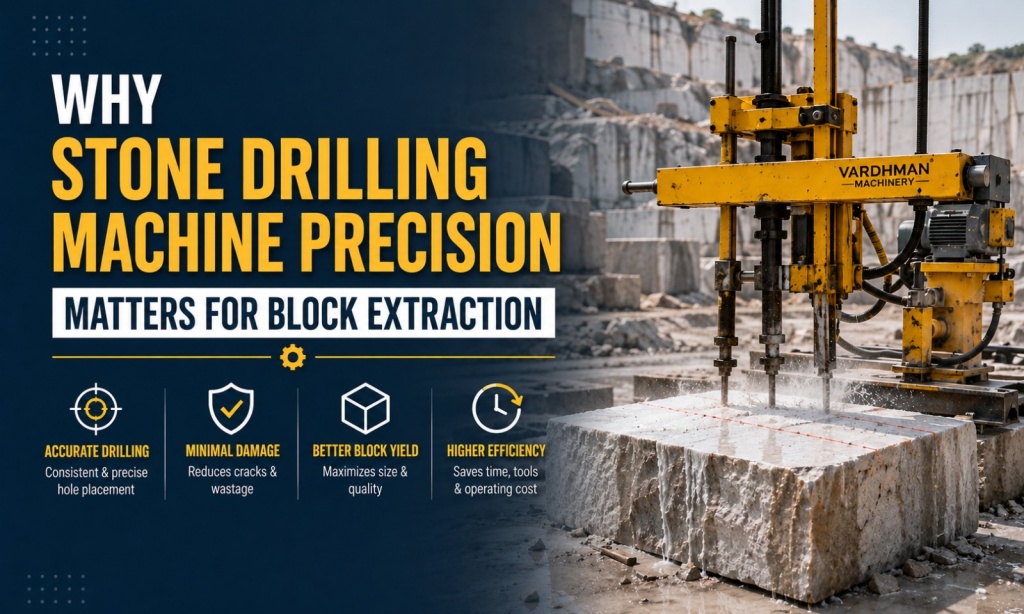
Stand on a quarry floor at 6 AM and watch a crew mark out a drilling line, and you'll see how much rides on a handful of millimeters. Get the spacing wrong and you don't just lose time, you lose a block that took hours of blasting and clearing to reach in the first place. This is where a stone drilling machine stops being just another piece of equipment sitting in the yard. It's the thing deciding whether that block comes out clean or shatters along a fault line nobody spotted until it was too late. Precision isn't a nice-to-have here. It's the whole game.
Getting the Stone Drilling Machine Setup Right From the Start
Here's what most people outside the industry don't realize: the setup matters more than the drilling itself. Hole depth, angle, spacing, all of it has to match the actual grain of the stone, not whatever the blueprint says on paper. A rig that drifts even a few millimeters off line will throw the whole extraction pattern out of balance, and you usually don't find out until the block is already cracked wrong. Good crews walk the block first. They check for hairline fractures, natural bedding planes, anything that might turn a clean cut into an expensive mistake. No machine, no matter how well built, fixes a plan that started on bad assumptions.
The Real Cost of Poor Alignment in Quarry Work
Misaligned holes don't just look sloppy. They cost real money, and the annoying part is you don't see it until weeks later when the numbers come in. A block that splits unevenly might still sell, sure, but at a lower grade, and lower grade eats your margin on every single truckload. Operators who invest in a dependable stone drilling machine notice fewer of these ugly surprises across a season. It costs more upfront. It saves a lot more down the line. That trade-off isn't complicated, it's just easy to ignore when the budget looks tight in January.
How Reliable Drilling Improves Block Yield
Yield is the number every quarry manager actually loses sleep over. A machine that holds a straight line through granite or marble, cut after cut after cut, turns raw rock into usable blocks at a rate that pays for the machine itself within a season or two. Vibration control matters more than most buyers expect going in. A rig that shudders under load wanders, and wandering holes mean jagged, ugly breaks instead of clean ones. We build our rigs around exactly this problem at Vardhman Machinery, and yes, that sometimes means a slightly slower cycle time. We'd rather be slower and straight than fast and wrong.
Maintenance Habits That Keep Performance Steady
Even a great rig loses accuracy fast if nobody's checking the bits, bearings, and hydraulic lines. Dust and grit get into moving parts quicker than people think in a quarry environment, and a worn component throws off alignment long before it actually breaks down. The crews who build a five-minute daily check into their routine, nothing fancy, just a look and a listen, get years more out of the same machine. It's not exciting work. Nobody brags about it at the end of the day. But it's the real difference between a rig that lasts a decade and one that's limping by year three.
Picking the Right Stone Drilling Machine for Your Site
Not every quarry needs the same rig, and honestly, a lot of buyers get burned by treating this like a one-size-fits-all decision. Granite behaves nothing like limestone or sandstone under the bit, and a machine built for one can genuinely struggle with the other. Weigh rock hardness, block size targets, terrain, before you lock anything in. Talk to the supplier directly about your actual site instead of trusting a spec sheet, because real rock almost never matches the catalog description exactly. It never has, in our experience.
Why Choose Vardhman Machinery
We didn't build this reputation overnight, and we're not going to pretend it was easy. Every stone drilling machine that leaves our workshop gets tested before it reaches a customer's site, no exceptions, because we've seen what happens when a rig goes out untested and starts drifting three weeks into a job. Customers keep coming back because the rigs hold their line even after months of hard, dusty, unglamorous use. Vardhman Machinery spends time actually understanding a site's rock type and extraction goals before we recommend anything, rather than pushing whatever's easiest to sell. That attention shows up later, in fewer breakdowns and cleaner blocks, and if we're honest, that's the part of the job we actually care about.
The Bottom Line for Quarry Owners
None of this is complicated in theory, which is almost the annoying part. Precise setup, steady maintenance, equipment that actually matches the rock, these beat guesswork and rushed jobs pretty much every time. What separates the quarries that stay profitable from the ones that keep struggling usually isn't luck or even budget. It's whether drilling accuracy got treated as a priority from day one, or as something you only think about after a costly mistake makes you.